Every Michael Bay Movie, Part 10: Bad Boys II (2003)

Every Michael Bay Movie, Part 10: Bad Boys II (2003)

Bad Boys II – 2003

Budget: 130 Million

Box Office Gross: 273.3 Million

Rotten Tomatoes Score: 23

Explosions: 8


Bad Boys II is about America’s response to 9/11.

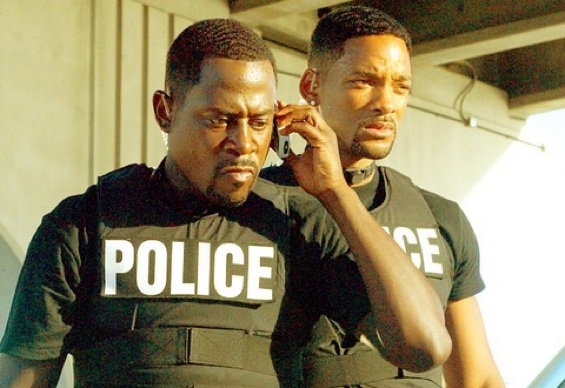
Listen, I don’t know if Michael Bay or screenwriters Rob Shelton and Jerry Stahl were thinking about 9/11 or the Iraq War when constructing the screenplay for the movie, or if Bad Boys II exists as an odd artifact of the culture and attitudes existing in America in the months immediately following the terrorist attacks. But as the plot and characters developed over the movie’s arbitrarily long 2-and-a-half hour run time I found myself thinking more and more about how Mike (Will Smith) and Marcus (Martin Lawrence) represent the attitudes held by Americans in 2002 and 2003 and how their actions can be seen as a scathing commentary on the way our country handled itself.

First of all, it’s an oddly paced amalgam of a movie that seems pieced together without regard for traditional storytelling techniques. The movie starts with a 30 minute action scene and never truly flows. It is full of homophobia, graphic violence, and an aversion to addressing emotional or mental issues. Racist jokes are featured prominently, as well as a morally inconclusive representation of the war on drugs. It is, if you’ll excuse my awkward application of logic where none may exist, very much like America: messy, ugly, often hateful, yet somehow beautiful in the diversity it represents.

There is also a protagonist problem. The movie lacks a real hero. Mike and Marcus definitely represent vastly different political worldviews. Mike spends the entire movie murdering witnesses and performing illegal searches. Marcus voices his concerns with these approaches but never really takes action to prevent them. The thing they have in common is that keep secrets. From each other, and from their families and friends.

While Mike ignores due process and manufactures evidence, Marcus is going through an emotional breakdown. He is more concerned with possibly becoming impotent than with the mission at hand. Even the impotence can be seen as a metaphor for the left’s ineffectualness when addressing the guttural nature of war and violence.

And when Marcus’ virility returns, the two immediately address their issues, embrace their own flaws, and remark on the fact that they can only be great when they are united.

“We ride together. We die together. Bad Boys for life.”

Other notes / evidence:

  • The movie begins with a violent confrontation with an extremist group which leads to one of our “heroes” being embarrassingly injured (he catches a bullet in the butt). Not quite a 9/11-level moment of violence, but a suggestion that the extreme response might have come from a position of humiliation rather than true and appropriate desire to catch any responsible parties.
  • The villains of the movie are Cuban, and it’s worth noting that, like Iraq and Afghanistan, Cuba has a complicated relationship with America primarily because of their association with Russia during the Cold War. Also, the Cuban gang leader murders a Russian gang leader about halfway through the movie.
  • Mike and Marcus’ “foreign” (hispanic) “allies” (another police duo) are consistently ambivalent about helping our heroes during the movie, primarily because of Mike and Marcus constant mistakes and refusal to follow the rules.
  • There is a scene near the beginning where the leader of an anti-narcotics police task force specifically mentions 9/11 when talking about America’s enhanced attention to international borders and drug trafficking.
  • The movie culminates in an action scene in Cuba, where, in an effort to get to Guantanamo Bay, they destroy an third-world-esque village filled with innocent civilians.

The movie is extremely technically impressive, especially the camera work, which features a lot of spinning, rotating shots. One scene in particular includes a camera orbiting a standoff, entering and exiting two rooms by weaving between characters and threading holes in walls, windows and doors. I’m still not sure how they did it. Another example, the aforementioned destruction of said third-world village, is beautiful, full of color and flying cloth and particle board and dirt and fast cars. But the casual violence toward civilians makes it feel a little less satisfying.

So I’m going to choose to believe that Bad Boys II, which came out in 2003, is an allegory about America’s reaction to a violent terrorist attack on its own soil. Because if it isn’t, it’s a poorly written, confusingly structured, unfunny action-comedy where you can’t relate to either of the heroes.

 Next: Lionel Richie!
Every Michael Bay Movie, Part 9: Pearl Harbor (2001)

Every Michael Bay Movie, Part 9: Pearl Harbor (2001)

Pearl Harbor (2001)

Budget: 140 Million

Box Office: 449.2 Million

Rotten Tomatoes Score: 25

Number of Explosions: 65


“If trouble wants me I’m ready for it. But why go looking for it?”

Writing about Michael Bay is difficult because his artistry is somewhat unrelated to whether his movies are bad. Armageddon is a great example of a mediocre movie where Bay’s excellent storytelling skills are on display. And it’s hard to think of another director who could have portrayed the titular scene in Pearl Harbor with such fearlessness and lack of sentiment.

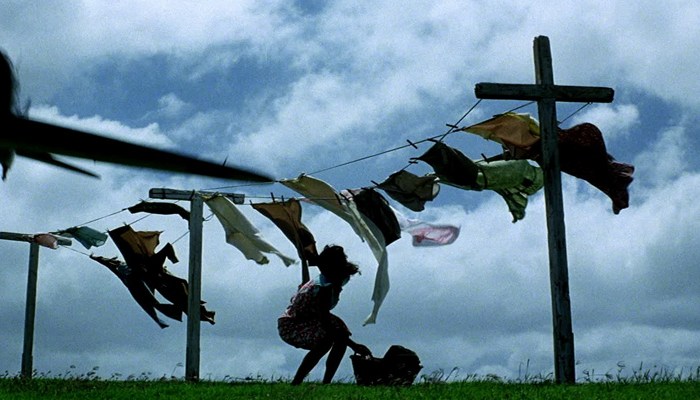
Rafe and Danny come straight out of middle America, starting the film as young boys literally playing in a cornfield. They are the American pastoral dream. They are the life people talk about when they talk about the “the good old days.” Full of masculinity, imaginary violence, heterosexuality, and child abuse. It is no surprise, then, when Pearl Harbor ends with the isolationist character dying and leaving his interventionist counterpart to a life embodying the American spirit.

“Not anxious to die. Just anxious to matter.”

The movie traverses decades, countries, and languages, yada-yada-ing a majority of World War II but focusing earnestly on the relationship between Rafe, Danny, and the girl with whom they both fall in love.

Speaking of girls, the way Pearl Harbor treats women is incredibly offensive. The fact that every named female character in the movie is a nurse can be explained away, I suppose, by historical accuracy, but the fact that the only thing the female characters do is jabber to each other about how to meet men is off-putting and rings false next to the two male leads who are driven by honor and integrity and freedom. Kate Beckinsale plays the female lead, Evelyn, who pouts for a majority of the movie’s 3 hour run time in lieu of having a man on screen to motivate her.

So Pearl Harbor is generally trite, boring, and muddled. But the 45 minute scene portraying the Japanese attack on Pearl Harbor is one of the great action scenes I’ve ever watched.

You can debate Bay’s motives, or whether his worldview leads to interesting or effective stories, but he knows how to execute the significance of a moment. Especially a moment filled with action. He doesn’t shy away from complexity and captures the minutiae of a detailed and terrifying moment while still showing the broadest strokes.

Combining computer-generated graphics with fantastic photography and precise editing, the attack on Pearl Harbor is horrific, fascinating, and suspenseful. It feels fast-paced and electric but also dreadfully long. It feels inevitable due to the 90 minutes of slow pacing leading up to the moment of the attack, but also depressingly avoidable, due to the reactions of the various analysts and politicians who denied that the U.S. was vulnerable.

If Pearl Harbor was truly the story of Pearl Harbor, I think I would have liked it. The movie could have been an hour and a half, with a gripping action scene and minor exposition introducing us to the characters surrounding the event. We know Bay can direct effective, concise exposition because we saw it in Armageddon. Rafe and Danny serving as key protagonists as well as metaphors for America’s ambivalence about entering World War II would have worked as a guide for the audience through the events of the attack.

Instead, Pearl Harbor is a 2 hour love triangle where you never really get the sense that any of the characters are right for each other. And there is a long, out of place, interlude of an action scene.

It’s hard to believe that Michael Bay was that invested in the emotional core of this love story. But it’s worth remembering that 2001, the year of Pearl Harbor’s release, was at a peak moment in overlong love stories hidden in historical dramas. Titanic. The Last Samurai. And many more.

The thing I think makes Pearl Harbor so unwatchable, in the end, is the humorlessness of its subject matter. Bay’s movies are ridiculous. Armageddon, so obviously unscientific its premise, can be read as a comedy of errors and campy melodrama set in a disaster movie framework. The characters in The Rock are such exaggerated personalities that they captivate us in spite of their personal stories rather than because of them. And Bad Boys is just an out-and-out comedy. Pearl Harbor can’t be funny, and can’t even really be fun, because the subject matter is so morose, so it ends up feeling juvenile and vapid.

It’s also a movie that I think Bay had to try his hand at, similar to how Tom Cruise had to star in Born on the Fourth of July and Far and Away to realize he couldn’t succeed in a charmless drama, that he was Alec Baldwin instead of Daniel Day Lewis (speaking of which Alec Baldwin is pure gas in Pearl Harbor, playing the dickhole sales leader from Glengarry Glen Ross if he were a fighter pilot).

Bay needed to realize that he was not Steven Spielberg, despite their similarities in style. And his post Pearl Harbor choices largely denote a commitment to fun distractions. We need our distractions.

Next: Bad Boys II

Every Michael Bay Movie, Part 5: Meat Loaf, I Will Do Anything For Love (1993)

Every Michael Bay Movie, Part 5: Meat Loaf, I Will Do Anything For Love (1993)

“I have traveled across the universe through the years to find her. Sometimes going all the way is just a start.”

This is an extremely Michael Bay song. The opening chord is played by a motorcycle engine. It is decidedly hardcore, full of images of hell and violence. Yet it is a singularly sentimental song, focusing more on personal emotion than the violence it describes. Bay’s feature movies will mirror this focus.

Bay’s video juxtaposes Mr. Loaf’s world of demonic imagery, religious symbols and smoke with a modern motorcycle and helicopter world where men in suits hunt down a lonely transgressive monster trapped in the past.

It is, like all of Bay’s work, devoid of symbolism outside of what can immediately hit you in the face. But here it works to showcase the loneliness in feeling unable to win at love because you can’t change who you are. There is no silver bullet, no secret “that” in the underlying meaning of the song, simply “that” which you cannot do because you will never be able to do it sufficiently. Because you are not the right person, and you never will be.

In other words, this is a fucking great music video. Is it the best thing Bay has ever directed? It’s possible.

Next up: Bay’s feature film career begins

Every Michael Bay Movie, Part 4: Wilson Phillips, You Won’t See Me Cry (1992)

Every Michael Bay Movie, Part 4: Wilson Phillips, You Won’t See Me Cry (1992)

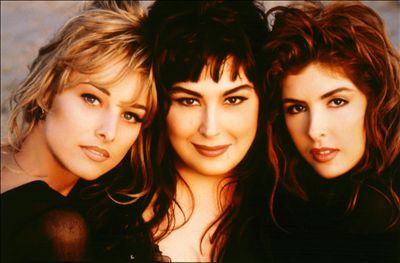
I have to admit, I don’t hate the super-cheesy soft rock of the late 1980s and early 1990s. But this is a fantastic example of why the genre is, to so many people, so hateful. Terrible smooth jazz saxophone, floor toms pounding and echoing as the music reaches its climax, sentimental and saccharine melodies. And lots and lots of white people.

In fact, at this point of his early career, Michael Bay was a champion of cheese. There are no explosions to be found in any of his videos, just white people complaining and celebrating their privilege.

There are some consistencies that one can point to in Bay’s music videos that could be his personal stylistic ticks, or they could just be indicative of the general style of the era. The black and white and color switching is here again, but unlike in the Divinyls video, it just seems pointless here.

To be honest this video is just complete garbage and could easily be replaced by a slideshow of stock footage models looking longingly into the distance.

It’s not much of a surprise considering this that Bay’s films are filled with exploding cities. If this is the culture that he was a party to as he came of age, he was right to want to see it destroyed.

Every Michael Bay Movie, Part 3: Divinyls, I Touch Myself (1991)

Every Michael Bay Movie, Part 3: Divinyls, I Touch Myself (1991)

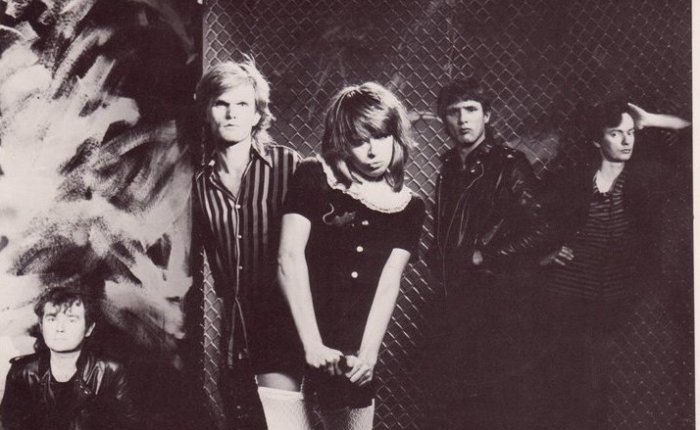
I Touch Myself is a catchy yet simplistic song with an overt sexual theme. It is not subtle; it does not suffer such high arts as symbolism or metaphor. Chrissy Amphlett is talking about literally touching herself, and we all know the social and cultural impositions to which she is referring.

Bay’s video is riddled with like non-subtleties. Lilies. Fainting Sofas. Poles in close proximity to women’s faces. Close-ups of cleavage. Georgia O’Keefe could have directed this video.

The film alternates between black and white and color, the color segments overlit and bright with purple, gold, and Amphlett’s striking red hair. In some music videos an oscillation between greys and color might indicate different realities – a dream sequence, a flashback, or even a fantasy.

But here the entirety is a fantasy – lurid, sexual, and loud. So lucidly presented, in fact, that the overt sexuality loses is sex appeal. A topic that should feel risqué feels desperate.

By the end of the song, you realize that the singer knows how silly she sounds. She is either so hopeless that she must make her desperation known to the world, or so mutually in love that she wants to shout it to whoever will listen. Her sexual need is a cartoon, and this is the perfect video for it.

Every Michael Bay Movie, Part 2: Kerri Kendall, Miss September (1990)

Every Michael Bay Movie, Part 2: Kerri Kendall, Miss September (1990)

It’s difficult to chart the early career of a film director. Bay’s early 1990s are full of music video and even some television commercial examples. However most of these don’t show up on IMDB because Bay is only credited on a compiled collection of videos that were released in a special record release, or through different means than feature or even short films usually are. However, he is credited in this Playboy video.

Yes, Michael Bay, directed it. Isn’t that weird? I watched it purely out of scientific curiosity. I AM COMMITTED TO MY CRAFT, PEOPLE.

The video features several interviews with Kendall mixed in with music-video style set-pieces featuring Michael Bay’s favorite things – soldiers, muscles, muscle cars, hot weather, and babes. Well, just one babe.

It is not particularly tasteful.

One of the things Michael Bay does really well is balancing close-ups with wide shots to convey place, action, and emotion all at the same time. This makes him an excellent director of action pieces. Everything is always changing. The camera angle, the zoom, and distance. This also would make Bay a pretty bad documentarian. And porn is, in a lot of ways, a documentary form. Or depending on who you talk to, maybe a dramatic re-enactment form.

I felt awkward watching this, and I feel awkward writing about it. But here’s the thing: The movie is 50 minutes long. This is Michael Bay’s first and only foray into feature film length directing prior to his first Hollywood release, Bad Boys (1995).

Isn’t that ridiculous? The guy was running around shooting 4 minute music videos and 30 second commercials and at some point someone had to sell Jerry Bruckheimer on using an unknown filmmaker in a production starring Will Smith and a selling point had to have been that Bay directed a softcore porn in 1990. Hollywood is weird.

Every Michael Bay Movie, Part 1: Vanilla Ice, I Love You (1990)

Every Michael Bay Movie, Part 1: Vanilla Ice, I Love You (1990)

“Girl, when I first saw you it was love at first sight.”

If you’re a fan of movies, you probably respond to the name “Michael Bay” with some combination of an eyeroll and the shouted exclamation “EXPLOSIONS!” This combination of reactions sufficiently describes Bay’s current place in our cultural consciousness.

It is extremely fitting, then, that Bay’s start as a director, before explosion-filled epics such as Armageddon and Transformers into popular culture, was as the director of music videos. Music videos and porn.

Music videos are not an unusual place for film directors to get their start. The short form allows for bold, truncated statements, and the nature of music allows for maximum creativity within an already-formed story. Hollywood Directors Brett Ratner and Antoine Fuqua as well as auteurs Michel Gondry and Spike Jonze all got their start in music videos. David Fincher might be the most famous example.

Music videos are, in many ways, pure spectacle – promotional pieces meant to generate excitement and advertise an underlying work of art created without the video in mind. And Bay, ever the man to buy-in on overblown pop-culture artifacts, got his start with none other than Vanilla Ice, compiling a video compilation of Vanilla Ice’s 1989 and 1990 music videos in a VHS collection called “Play that Funky Music.”

Take a look at this wonderful example:

I don’t want to overinterpret this, but here we have a great example of Bay’s tendencies in compact form. Crash cuts. Flashes of light. Weird camera angles. Overt Patriotic imagery. The smooth-jazzy ballad is a complete mismatch for Bay’s hectic, arrhythmic cutting which would be a better fit for a Bran flashback sequence on Game of Thrones.

This is as fitting an introduction as any to the Every Michael Bay Movie project. Enjoy.